Now that you're familiar with the types of Experience and Operational Data that an organization can collect, this section will take you through how you can apply this data to uncover insights and scale actions.
In this article:
-
Example case study
-
Analyzing X-Data alone
-
Analyzing X-Data and O-Data together
-
Defining actions using X-Data and O-Data
-
Get started with XM in your organization
This case study will help you understand the value of using Experience and Operational data in practice for analysis. Below is the example case study:

Q-Sunglass Co. is a company that manufactures and sells quality and affordable sunglasses around the world. They have an XM program capturing feedback from their customers on each purchase.
From a recent simple feedback survey they have the following data available to them:
-
X-Data: Customer Satisfaction responses (collected in a survey).
-
O-Data: Customer product ownership and support call history (available from the company transaction logs).
With the X-Data collected, Q-Sunglasses Co. can calculate the average satisfaction rating for the customers who responded to the survey. They can see if their satisfaction delivery performance falls above or below their target.
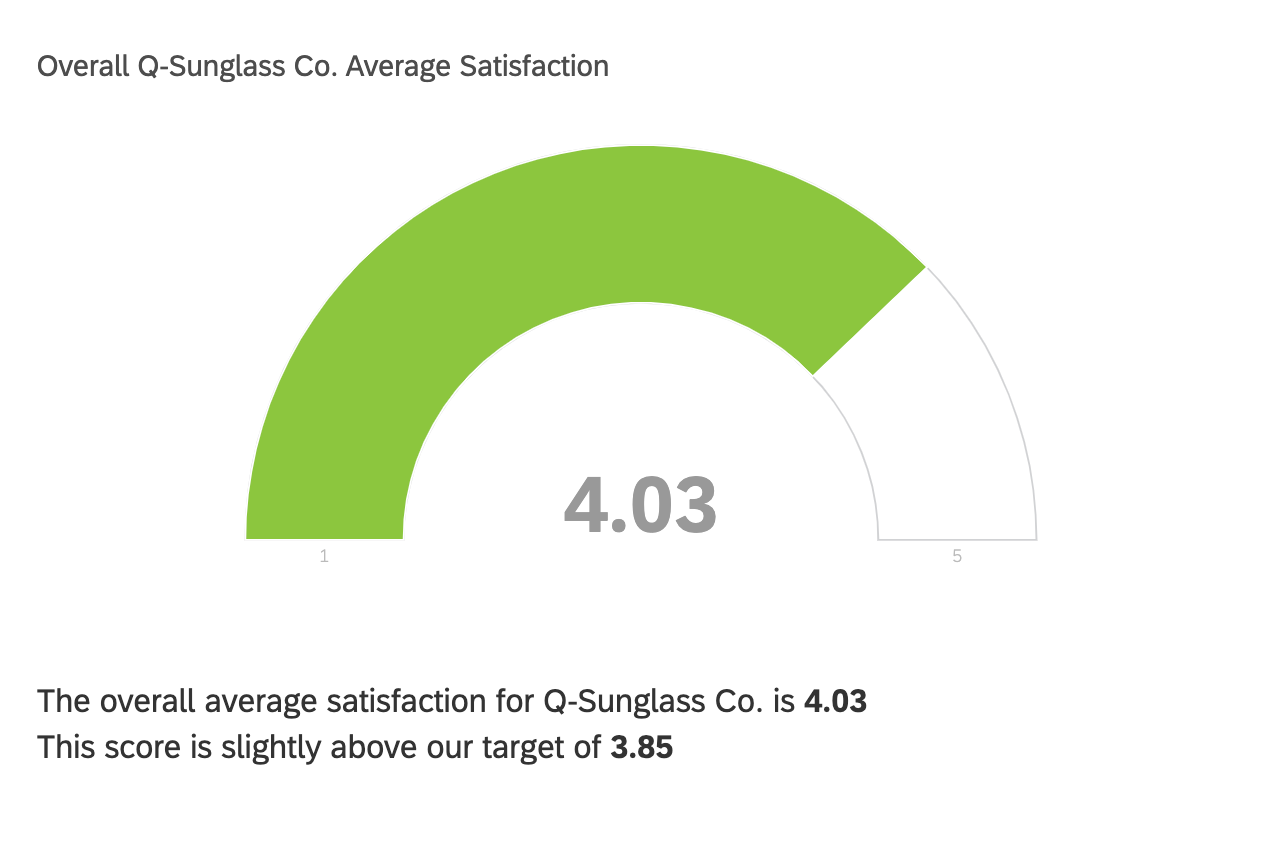
That’s an extremely valuable insight by which Q-Sunglasses Co. can quickly assess at a high level the ultimate satisfaction outcome of all their combined processes. But the insights derived from their data can be elevated to the next level by overlaying and applying a more detailed lens using O-Data.
Q-Sunglasses Co. can create a more detailed understanding of their performance and become more predictive by combining the available Operational data with the collected satisfaction data from the survey.
For example:
-
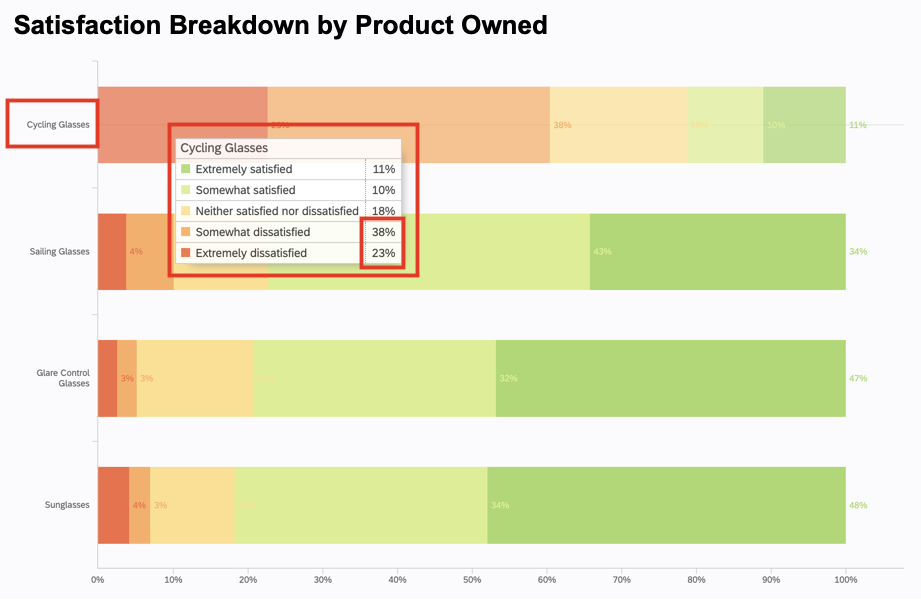
Create a Chart with the overall satisfaction score broken down by product ownership.
-
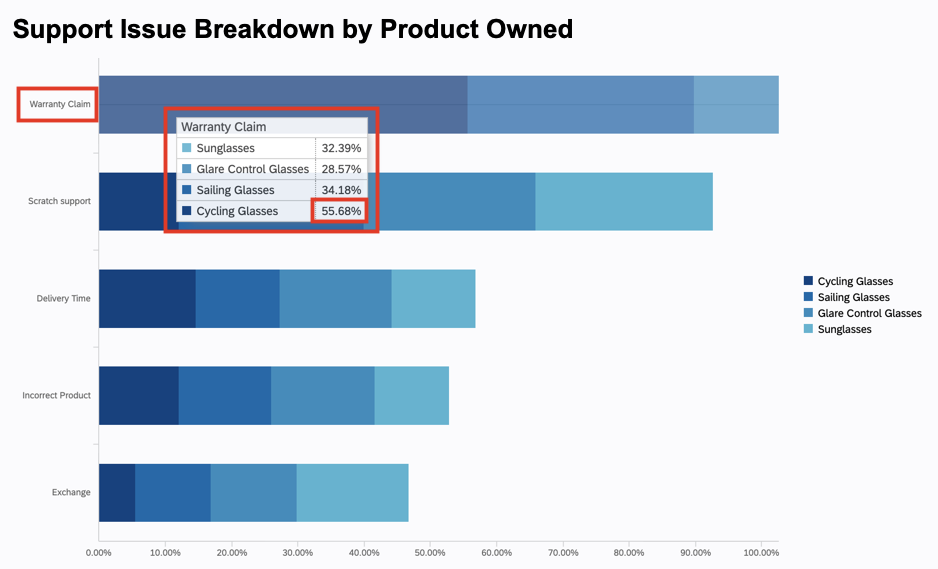
For the dissatisfied and extremely dissatisfied customers, analyze different versions of their products together with the type of support call for each product.
-
For the dissatisfied and extremely dissatisfied customers, analyze the detailed comments recorded by support center representatives about the issue request.
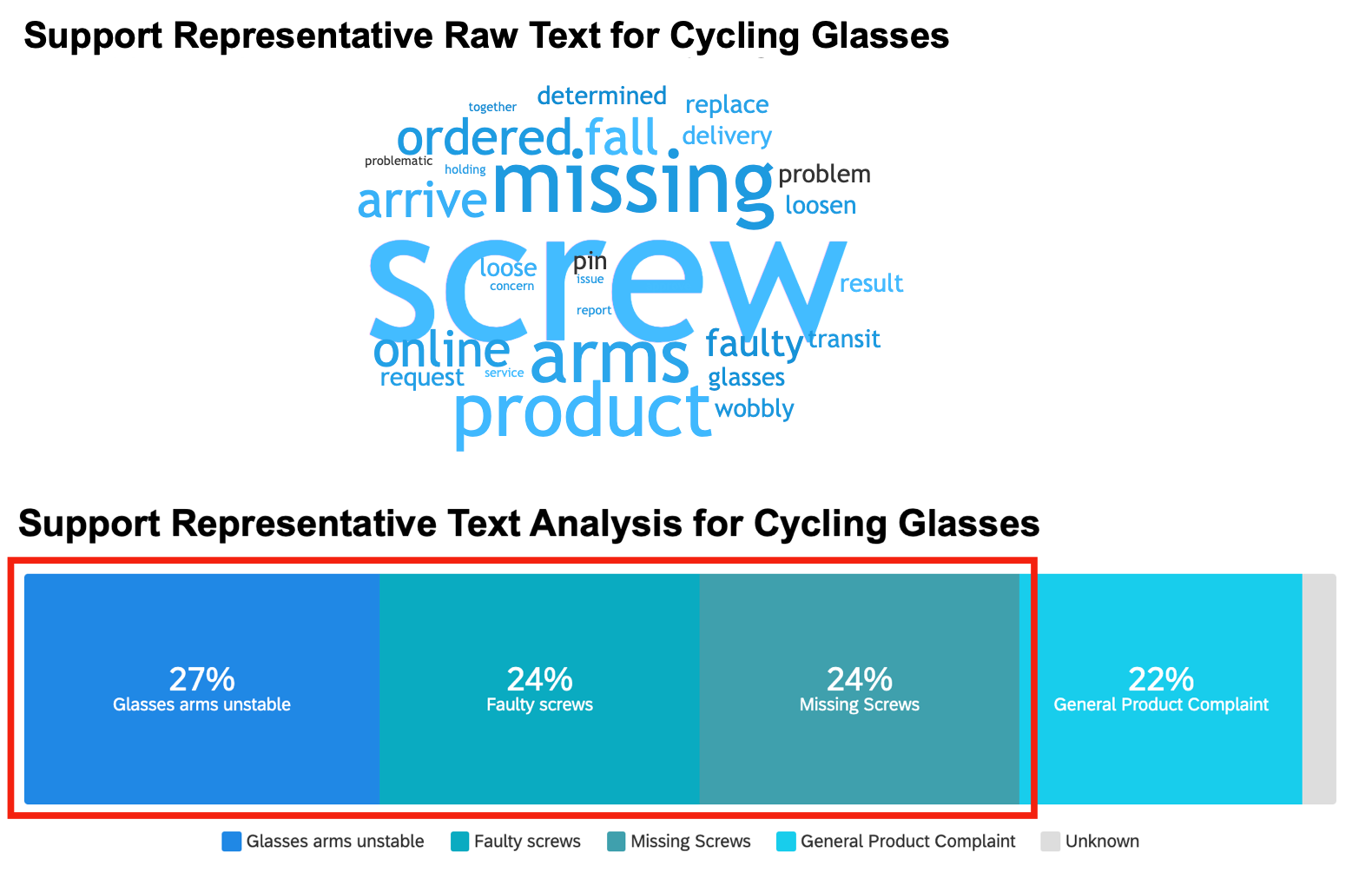
With the combined power of X-Data and O-Data, the insight from this survey revealed that customers who own Q-Sunglass Co. Cycling Glasses are more likely to have below-average satisfaction, and you can see that the call center support topics frequently include warranty requests for faulty and missing screws.
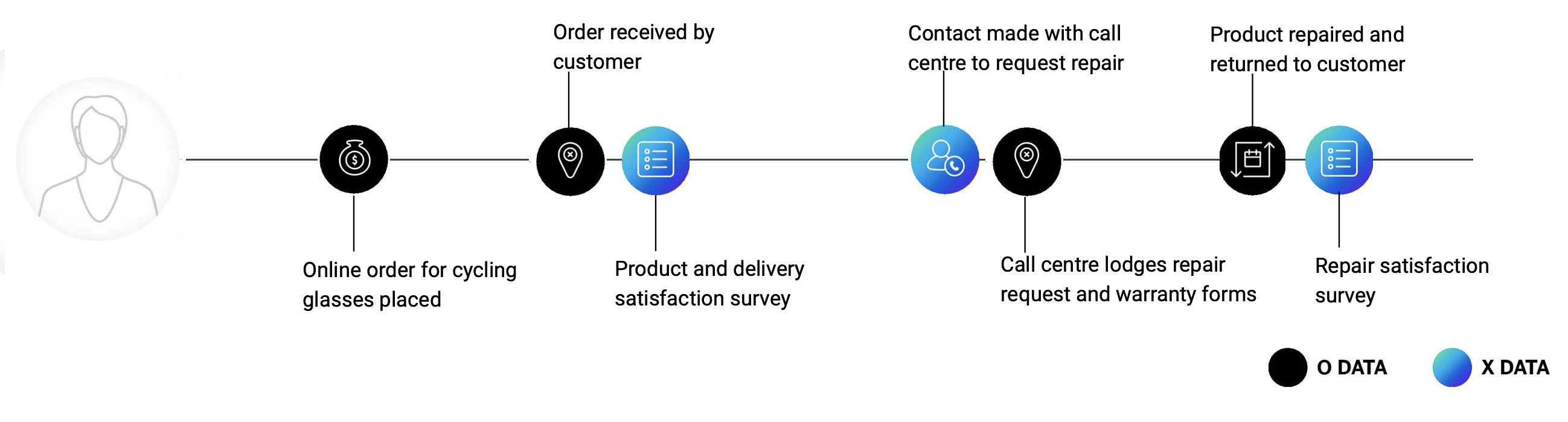
As a result, Q-Sunglasses Co. can make inferences about the broader experience of owning these types of glasses and impending service claims across their whole customer base (not just the survey respondents) enabling them to plan a broad intervention.
Q-Sunglasses Co. can now scale their learning and actions by identifying all their customers who bought cycling glasses in the past 12 months and take proactive measures to supply the warranty service forms to these customers before the complaints are made by these customers to call centers.

The positive business outcome is that customers feel Q-Sunglasses Co. is customer-centric and proactively puts customers' interests first to provide a seamless claim experience for potentially faulty products, generating loyalty and brand equity. It also creates other benefits:
-
Reduces incoming calls to contact centers, thereby freeing up capacity to better serve other customers.
-
Provides customers with a sense of respect and value from the business.
-
Demonstrates a customer-centric approach that can be used in marketing campaigns.
-
Enables more targeted use of resources to the impacted customers.
Optional Additional Learning: You can learn more about XM Operations and complete an XM Maturity Self Assessment in this publication by the XM Institute (click here).
As you can see, Experience Management is an important discipline to nurture in your organization that enables you to adapt to expectations and market changes. It is supported by technology, culture, and competency and is most successful when applied holistically across your organization.
To kick off XM in your organization start with the following actions:
-
Have conversations with your leadership teams, managers, and employees about the experiences that matter to them and their customers/members.
-
Discuss how your collective understanding of these groups can be improved.
-
Prioritize a list of the most impactful experiences to start with, which X and O-Data elements will be needed, and the corporate cultural values you'd like to influence.
-
Visit the XM Institute to complete the XM Maturity Self Assessment (click here).